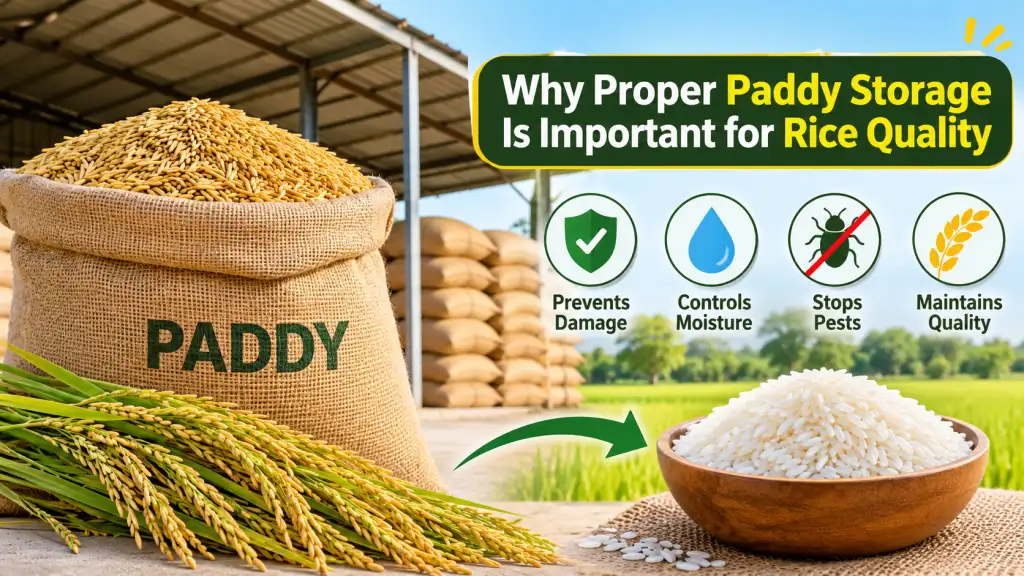
Proper paddy storage is essential for maintaining rice quality before milling. It helps prevent moisture damage, pest infestation, mold growth, and grain deterioration. Good storage practices reduce post-harvest losses and support better rice milling recovery.
What Is Paddy Storage?
Paddy storage is the process of preserving harvested rice grains with their outer husk under suitable conditions until milling or sale. It involves proper drying, cleaning, moisture control, and protection from pests and weather.
- Proper paddy storage helps maintain grain colour, aroma, and physical quality. It also reduces insect damage, mould growth, and grain deterioration. Good storage practices help preserve the value of paddy and support better rice quality.
Ideal Moisture Content for Paddy Storage
Moisture control is essential for maintaining paddy quality during storage. A moisture content of approximately 12–14% is generally recommended for dried paddy, depending on storage duration and conditions.
- Prevent mould growth: Proper moisture levels reduce the risk of fungal development and spoilage.
- Maintain grain quality: Controlled moisture helps preserve grain colour, texture, and overall quality.
- Reduce insect activity: Dry storage conditions help minimize insect infestation.
- Prevent grain breakage: Avoid excessive drying, as very dry grains can become more susceptible to cracking during milling.
- Monitor moisture regularly: Use a moisture meter to check grain moisture before and during storage.
Proper drying and moisture management help reduce storage losses and improve milling recovery.
Best Paddy Storage Methods
Common paddy storage methods include:
- Bag storage: Suitable for smaller quantities and warehouse storage.
- Warehouse storage: Protects paddy from rain and external contamination.
- Metal bins: Provide enclosed storage when properly managed.
- Silo storage: Suitable for large-scale bulk grain storage.
The best method depends on storage capacity, budget, and duration.
Ideal Storage Conditions
Paddy should be stored in a clean, dry, and well-maintained facility. Proper moisture management, suitable ventilation, pest prevention, and protection from rain are essential. Bags should be placed on suitable raised platforms rather than directly on damp floors.
- Temperature control: Store paddy in a cool environment to reduce deterioration.
- Humidity management: Keep relative humidity low to prevent moisture absorption.
- Proper ventilation: Ensure adequate airflow to avoid heat and moisture buildup.
- Clean storage area: Keep warehouses free from dust, pests, insects, and rodents.
- Moisture protection: Use leak-proof roofs and protect paddy from rain and water exposure.
- Regular inspection: Check stored paddy periodically for mould, insects, and unusual odours.
Common Paddy Storage Problems
- Excess Moisture: High moisture content can cause mould growth and grain deterioration.
- Fungal Growth: Damp storage conditions encourage fungal development and discolouration.
- Insect Infestation: Weevils and other storage pests can damage paddy grains.
- Rodent Damage: Rats and mice contaminate and consume stored paddy.
- Poor Ventilation: Inadequate airflow causes heat and moisture buildup.
- Temperature Fluctuations: Changing temperatures can affect grain quality and storage stability.
- Water Leakage: Rainwater entering storage areas can damage paddy bags and grains.
- Grain Discolouration: Improper storage can affect the natural colour and appearance of paddy.
- Grain Cracking and Breakage: Improper drying and moisture changes can increase grain cracking during milling.
Best Practices for Farmers and Rice Mill Owners
Farmers and rice mill owners should follow these practices:
- Dry paddy to a suitable moisture level.
- Keep storage facilities clean and dry.
- Protect grain from pests and rainwater.
- Inspect stored paddy regularly.
- Maintain records of moisture, quantity, and storage dates.
- Check grain quality before milling.
Paddy Storage During the Monsoon Season
Monsoon humidity and rainfall increase the risk of moisture damage. Inspect roofs and drainage systems, keep paddy bags off damp floors, and monitor grain moisture regularly. Ventilation should be managed carefully because humid air can increase moisture levels under certain conditions.
Important Paddy Storage Practices During Monsoon:
- Maintain Proper Moisture Levels: Dry paddy to a safe moisture level, generally around 12–14%, before long-term storage.
- Prevent Water Leakage: Ensure storage buildings have leak-proof roofs, walls, and floors.
- Use Raised Platforms: Store paddy bags on wooden pallets instead of placing them directly on the floor.
- Ensure Proper Ventilation: Maintain adequate airflow to prevent moisture and heat buildup.
- Protect Against Humidity: Use suitable moisture-control measures to reduce dampness inside storage areas.
- Inspect Regularly: Check stored paddy for mould, insects, damp patches, and unusual odours.
- Maintain Cleanliness: Keep storage areas free from dust, pests, and leftover grains.
Common Storage Mistakes to Avoid
- Storing Wet Paddy: Storing paddy without proper drying can cause mould growth and grain spoilage.
- Ignoring Roof Leaks: Rainwater entering the storage area can damage paddy and increase moisture levels.
- Placing Bags on Damp Floors: Direct contact with damp floors can increase moisture absorption and spoilage risks.
- Neglecting Pest Inspections: Failing to check for insects and rodents can lead to grain damage and contamination.
- Mixing Different Grain Batches: Mixing paddy without checking moisture levels and quality can affect storage management.
- Poor Ventilation: Improper airflow can contribute to moisture buildup and grain deterioration.
- Ignoring Regular Inspections: Failing to monitor stored paddy can delay the detection of storage problems.
Economic Benefits of Proper Paddy Storage
- Reduces Post-Harvest Losses: Prevents grain damage caused by moisture, pests, and mould, helping preserve more of the harvested paddy.
- Preserves Market Value: Maintains grain quality and helps meet buyers’ quality requirements.
- Improves Milling Recovery: Preserving grain integrity can help reduce breakage during milling.
- Reduces Additional Costs: Minimizes avoidable expenses associated with spoilage, pest damage, and grain handling.
- Improves Inventory Management: Helps farmers and rice mill owners monitor stock quantity, quality, and storage duration.
- Protects Business Investment: Helps preserve the value of stored paddy and supports better business management.
- Supports Customer Satisfaction: Consistent grain quality helps rice mills meet customer expectations
Frequently Asked Questions
Why do rice varieties differ in cooking quality?
Rice varieties differ in grain length, starch composition, amylose content, aroma, and texture, which influence how the rice cooks and feels when eaten.
What factors influence the price of paddy in India?
Paddy prices depend on variety, grain quality, moisture content, market demand, supply, transportation costs, and applicable government procurement policies.
Why is paddy quality inspection important before milling?
Quality inspection helps identify impurities, damaged grains, and moisture-related issues before processing, supporting better milling decisions.