What Is Milling Yield?
Milling yield is the percentage of usable milled rice obtained from a given quantity of paddy after the milling process. It is an important performance indicator because it shows how effectively a rice mill converts raw paddy into milled rice.
What Does Milling Yield Include?
Depending on the mill's measurement convention, milled rice may include:
- Head rice
- Broken rice
- Small broken rice, where applicable
It generally does not mean head rice yield. Head rice yield measures the whole-kernel portion specifically.
| Metrix | Measures | Example |
|---|---|---|
| Milling Yield | Total milled rice recovered from paddy | 68% |
| Head Rice Yield | Head/whole rice recovered from paddy | 58% |
| Broken rice% | Broken portion of the specified rice output | 10% |
ByProducts of Rice Milling
Rice milling byproducts are not simply waste materials. Rice husk, bran, broken rice, polishings and other milling fractions can have significant commercial value when properly separated, handled and utilized.
1. Rice Husk
Rice husk is the hard outer covering of the paddy grain. It is removed during the dehusking or hulling stage of rice milling.
- Typically accounts for around 20% of the weight of paddy, although the actual percentage varies by rice variety and processing conditions.
- Has a high fiber and silica content.
- Commonly used as boiler fuel and biomass energy in rice mills.
- Can also be processed into rice husk ash, briquettes, pellets, and silica-based products.
- Uncontrolled burning or improper disposal can create environmental and air-quality problems.
2. Rice Bran
Rice bran is the outer layer removed from brown rice during the whitening and polishing process.
- Contains oil, protein, fiber, vitamins, minerals, and other valuable compounds.
- It is an important raw material for rice bran oil production.
- Can also be used in animal feed and food applications.
- Fresh rice bran can deteriorate relatively quickly because of its oil content. Proper stabilization and storage are therefore important to prevent rancidity and quality loss.
3. Broken Rice
Broken rice consists of rice kernels that are fractured during milling, handling, and grading.
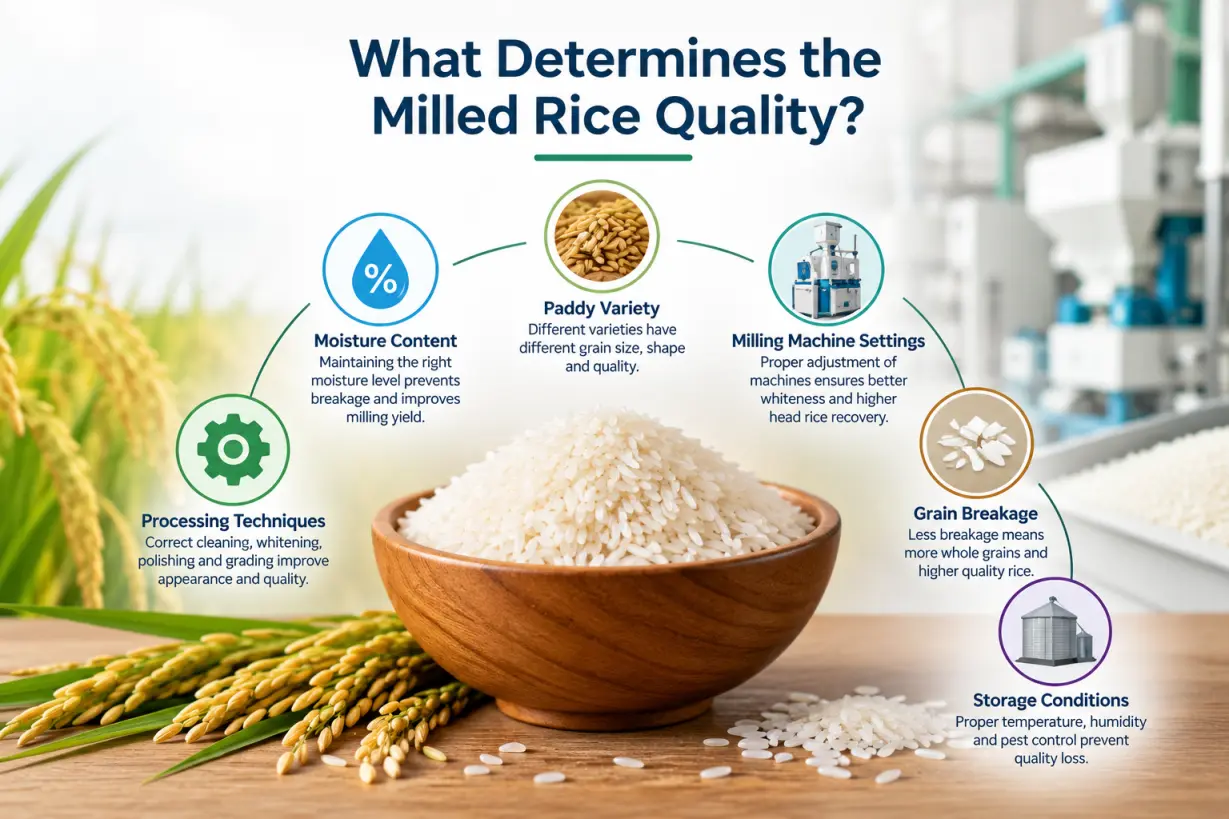
- The amount of broken rice depends on paddy quality, moisture content, variety, drying conditions, and milling-machine settings.
- Broken rice is not necessarily waste and can have significant commercial value.
- Used for rice flour, starch, processed foods, brewing, fermentation, and animal feed.
- Larger and cleaner broken kernels generally have greater commercial value than very small fragments.
4. Rice Dust / Fines
Rice dust or fines refers to the very small particles generated during cleaning, handling, milling, and grading.
- May contain fine rice particles, bran, husk particles, or other material depending on where it is collected.
- Can be used in composting and certain agricultural applications.
- Some suitable fractions may also be used as animal feed, depending on their composition and cleanliness.
- Proper collection and separation can reduce material loss and improve overall mill efficiency.
Why Modern Rice Milling Is Important To reduce grain breakage
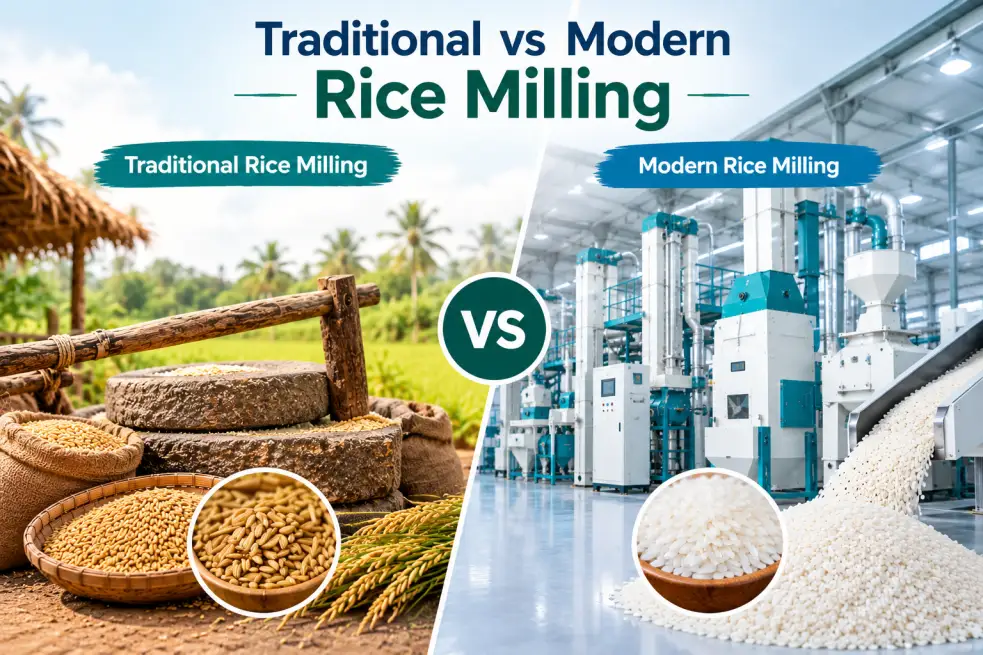
Modern rice milling plays an important role in converting paddy into high-quality, safe, and marketable rice while reducing grain breakage and improving processing efficiency. Compared with traditional milling methods, modern rice mills use advanced machinery and controlled processing stages to improve the recovery of whole rice and maintain consistent quality.
Here are the main reasons why modern rice milling is important:
1. Higher Milling Yield
Modern milling equipment is designed to recover more usable rice from paddy while minimizing unnecessary losses. This can help improve overall milling recovery and head rice yield.
Better control of:
- Dehusking
- Whitening
- Polishing
- Separation
- Grading
2. Lower Grain Breakage
One of the major goals of modern milling is to reduce the number of rice kernels that break during processing.
Controlled machine settings, appropriate moisture management, and efficient milling equipment can help produce a higher proportion of whole kernels.
This is important because whole rice generally has greater market value than broken rice.
3. Consistent Rice Quality
Consistency is particularly important for commercial rice production and branded rice products.
Modern rice mills provide better control over the processing conditions, helping produce rice with more consistent:
- Whiteness
- Kernel size
- Shape
- Cleanliness
- Degree of milling
- Broken-kernel percentage
4. Better Cleaning and Food Safety
Proper cleaning, hygienic handling, and regular equipment maintenance also help reduce contamination risks during rice processing. Color sorters further improve product quality by identifying and separating discoloured, damaged, and defective grains.
- Stones
- Dust
- Straw
- Soil
- Foreign seeds
- Other impurities
5. Efficient Removal of Husk and Bran
Modern machinery allows the different layers of the paddy grain to be removed more efficiently.
The process separates:
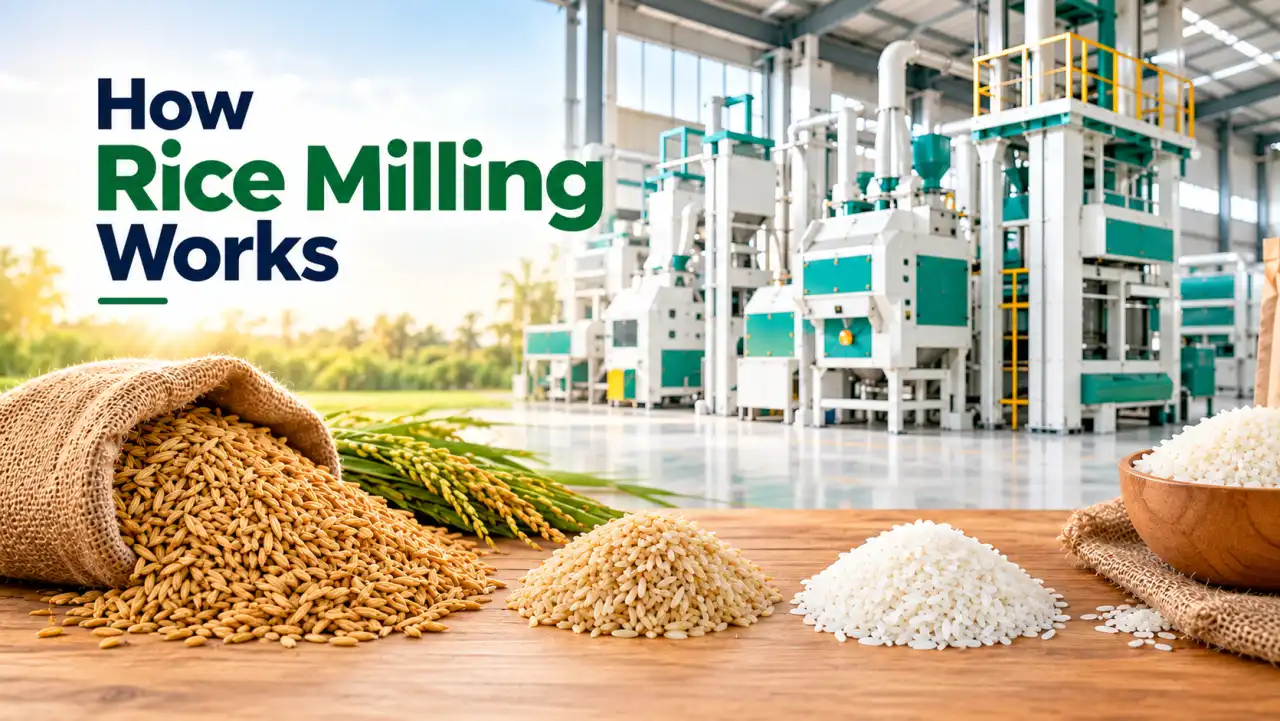
Paddy → Husk → Brown Rice → Bran → Milled Rice
Better separation helps reduce contamination between different product streams and allows valuable byproducts such as rice husk and rice bran to be recovered.
6. Better Byproduct Utilization
Modern rice mills can recover and utilize milling byproducts instead of treating them simply as waste.
This can create additional sources of revenue for rice processors.
For example:
- Rice husk → biomass fuel, briquettes, rice husk ash
- Rice bran → rice bran oil and feed
- Broken rice → flour, starch, food products and feed
- Rice fines → selected agricultural or feed applications