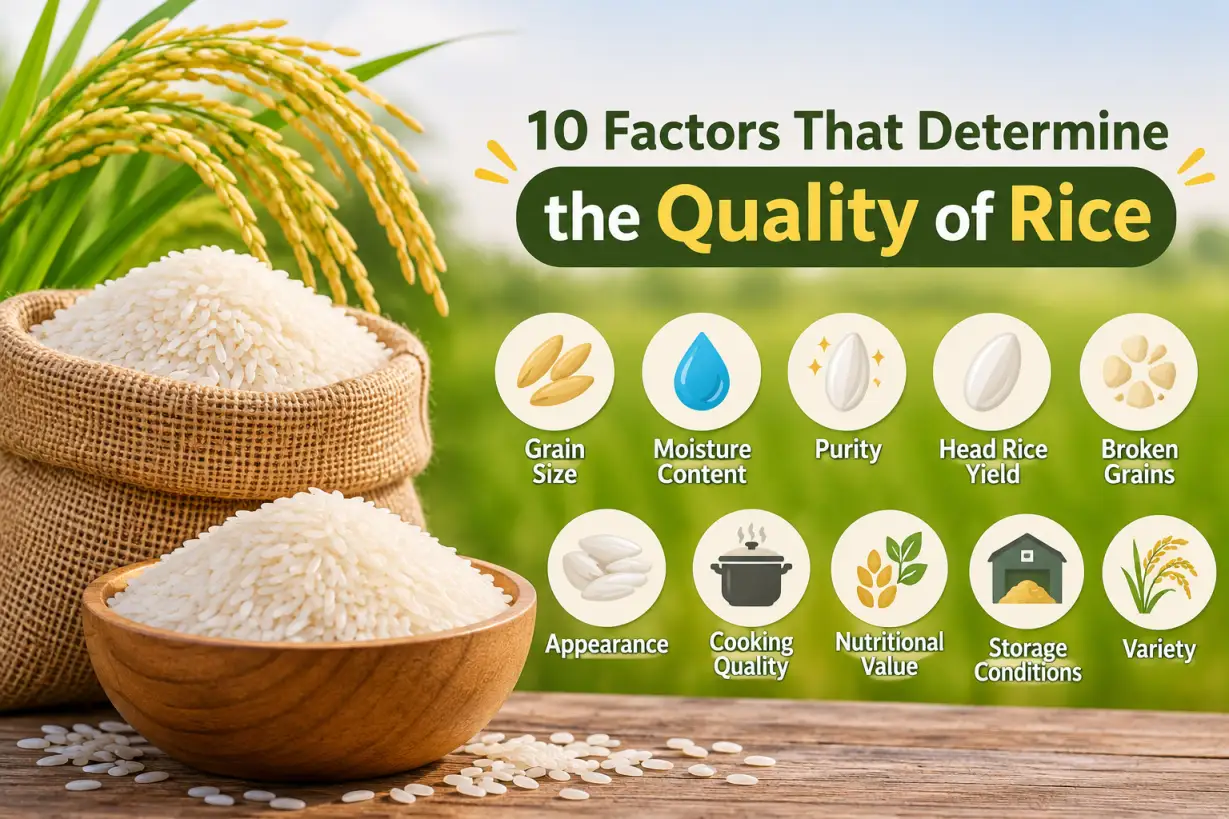
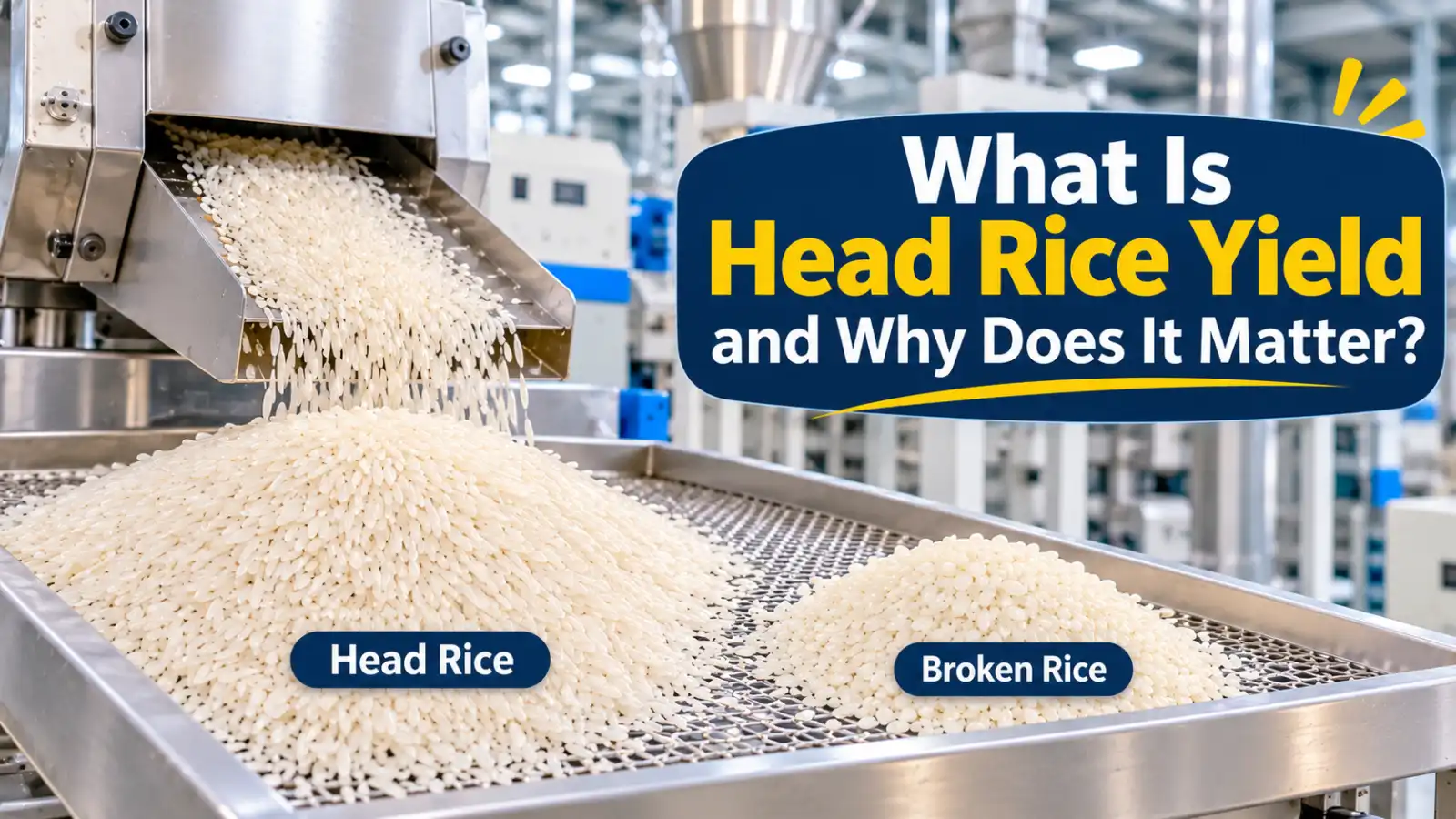
The quality of milled rice is not determined only by its colour, appearance or cooking characteristics. The proportion of whole grains obtained after milling is also an important measure of rice quality and processing performance. This measurement is commonly known as head rice yield.
What Is Head Rice Yield?
Head rice yield refers to the proportion of whole or substantially intact rice kernels recovered after milling. In many rice grading practices, head rice consists of milled kernels that are at least three-fourths of the average length of a whole kernel of the same variety.
How Is Head Rice Yield Calculated?
Head rice yield can be calculated by comparing the weight of recovered head rice with the original weight of paddy processed.
Formula:
Head Rice Yield (%) = (Weight of Head Rice ÷ Weight of Paddy Input) × 100
Example:
Suppose a rice mill processes 100 kg of paddy and obtains:
Head rice: 55 kg
Broken rice: 10 kg
Other milling fractions: Remaining output, including bran and husk.
Head Rice Yield = (55 ÷ 100) × 100
Head Rice Yield = 55%
This means that 55% of the original paddy input was recovered as head rice.
Important clarification: Head rice yield and head rice percentage are not always used interchangeably. Head rice percentage may refer to the proportion of head rice within the total milled rice obtained. Always specify the calculation basis when reporting results.
Difference Between Head Rice Yield and Head Rice Percentage
| Comparison | Head Rice Yield | Head Rice Percentage |
|---|---|---|
| Meaning | Measures whole rice recovered from the original paddy input. | Measures the proportion of whole rice within the total milled rice output |
| Calculation basis | Total paddy weight | Total milled rice weight |
| Formula | (Head Rice Weight ÷ Paddy Input Weight) × 100 | Head Rice Weight ÷ Total Milled Rice Weight) × 100 |
| Purpose | Evaluates whole-grain recovery from paddy | Evaluates the proportion of whole grains in milled rice |
| Main application | Assessing overall head rice recovery | Assessing the composition and quality of milled rice |
Practical Example:
Suppose a rice mill processes 100 kg of paddy and obtains:
Head rice: 55 kg
Broken rice: 10 kg
Total milled rice: 65 kg
Head Rice Yield:
(55 ÷ 100) × 100 = 55%
Head Rice Percentage:
(55 ÷ 65) × 100 = 84.6%
Factors That Affect Head Rice Yield
1. Paddy Variety and Grain Characteristics
Different rice varieties have different grain lengths, shapes, physical structures and resistance to breakage. Some varieties naturally produce a higher proportion of whole kernels during milling, while others may be more susceptible to cracking.
2. Paddy Moisture Content
Moisture content has a significant influence on grain strength. Paddy that is excessively wet or unevenly dried may be more vulnerable to damage during processing.
Proper moisture management before milling helps maintain grain stability and reduces the risk of kernel cracking.
3. Drying Conditions
Rapid or uneven drying can create moisture differences between the outer and inner portions of a rice grain. These differences may create internal stresses, which can lead to fissures.
4. Grain Fissures and Pre-existing Damage
Some rice grains develop cracks before entering the milling machinery. These fissures may result from improper drying, handling, transportation or storage conditions.
Even when milling equipment is properly adjusted, already damaged grains may break during processing.
5. Milling Machine Settings
Incorrect machine settings can place unnecessary pressure on rice kernels. Excessive pressure, unsuitable roller gaps and improper feed rates can increase mechanical stress during milling.
Appropriate equipment adjustments help protect grain structure.
6. Paddy Storage Conditions
Poor storage conditions can expose paddy to moisture fluctuations, insects, fungal damage and other quality problems.
Proper storage helps preserve grain condition before it enters the milling process.
7. Handling and Transportation
Rough handling, repeated movement and excessive mechanical impact can damage paddy grains. Careful transportation and handling help reduce the possibility of pre-milling grain damage.
Why Does Head Rice Yield Matter?
Head rice yield is important for several operational and commercial reasons.
1. Determines the Commercial Value of Rice
Whole rice kernels generally have greater market demand in segments where appearance and grain integrity are important. A higher proportion of head rice can improve the commercial value of the finished product.
2. Helps Evaluate Raw Paddy Quality
Head rice recovery provides useful information about the condition of incoming paddy. Comparing results from different paddy batches can help identify variations in grain quality and suitability for milling.
3. Supports Better Production Planning
Rice mill operators can use head rice yield measurements to estimate the quantity of whole-grain rice expected from a given quantity of paddy.
This information supports production planning, inventory management and customer order fulfilment.
4. Helps Maintain Product Consistency
Monitoring head rice yield across different production batches helps mills identify changes in output quality. Consistent monitoring makes it easier to investigate variations and maintain product specifications.
How Can Rice Mills Improve Head Rice Yield?
Improving head rice yield requires attention to grain quality at every stage, from paddy procurement to final milling.
1. Select Suitable Quality Paddy
Evaluate incoming paddy for variety, moisture content, immature grains, damaged kernels and visible defects before processing.
2. Maintain Proper Drying Practices
Use controlled drying methods to achieve uniform moisture distribution. Avoid sudden drying conditions that may increase internal grain stress.
3. Store Paddy Correctly
Maintain suitable moisture levels and protect stored paddy from rain, excessive humidity, insects and fungal contamination.
4. Adjust Milling Equipment Properly
Maintain suitable husker roller gaps, feed rates and whitening settings according to the paddy variety and grain condition.
5. Monitor Processing Conditions
Regularly inspect the output from different milling stages. This helps operators identify where grain damage may be occurring.
6. Maintain and Inspect Machinery
Worn components, incorrect alignment and poor equipment maintenance can affect processing performance. Regular inspection and servicing help maintain consistent operation.
7. Evaluate Finished Rice Samples
Collect and examine representative rice samples to measure whole kernels, broken grains and other quality characteristics. Maintain batch-wise records to identify performance changes.
How Is Head Rice Yield Measured in a Rice Mill?
Head rice yield should be measured using a consistent sampling and weighing procedure.
For reliable comparisons, the same sample preparation, milling procedure and grading criteria should be followed each time.
A practical approach includes:
- Collect a representative sample of paddy before milling.
- Record the exact weight of the paddy sample.
- Process the sample under the selected milling conditions.
- Separate head rice from broken rice using an appropriate grading method.
- Weigh the recovered head rice.
- Calculate head rice yield using the original paddy weight as the denominator.
- Record the result along with the paddy variety, moisture level and processing conditions.
Common Mistakes When Evaluating Head Rice Yield
Incorrect measurements can lead to misleading conclusions about rice mill performance.
- Confusing Head Rice Yield with Total Milling Recovery: They measure different aspects of the milling output.
- Ignoring Sample Quality: A non-representative sample may not reflect the actual paddy batch.
- Using Different Calculation Methods: Comparing results with different denominators can produce incorrect conclusions.
- Overlooking Grain Length Standards: Head rice classification should follow a consistent grading definition.
- Ignoring Moisture Differences: Results should be recorded with relevant moisture information because moisture affects weight.
- Focusing Only on the Final Number: A lower result should be investigated by examining paddy quality, drying, storage and milling conditions.
Frequently Asked Questions
1. Does rice grain size influence its market value?
Yes. Grain length, shape and uniformity can influence the market preference and commercial value of different rice varieties.
2. Why do some rice varieties produce more broken grains?
Differences in grain structure, chalkiness, fissures and physical characteristics can make certain varieties more susceptible to breakage.
3. What is chalky rice?
Chalky rice contains opaque, white areas within the grain caused by loosely packed starch granules. It may be more prone to breakage during milling.
4. How does parboiling affect rice grain quality?
Parboiling involves soaking, steaming and drying paddy. It can strengthen the grain structure and influence its milling characteristics.
5. What is the role of a rice whitening machine?
A rice whitening machine removes bran layers from brown rice to produce white rice. Proper machine adjustment helps achieve the required degree of whitening.
Conclusion
Head rice yield is an important measurement for understanding the quality and commercial potential of milled rice. It gives rice mill operators a clearer picture of how much whole-grain rice can be recovered from the original paddy input. A clear Understanding of this measurement allows rice mills to evaluate their production performance more effectively. By evaluating raw paddy quality, controlling moisture, following proper drying and storage practices, and maintaining suitable milling conditions, rice mills can protect grain integrity and achieve more consistent results.