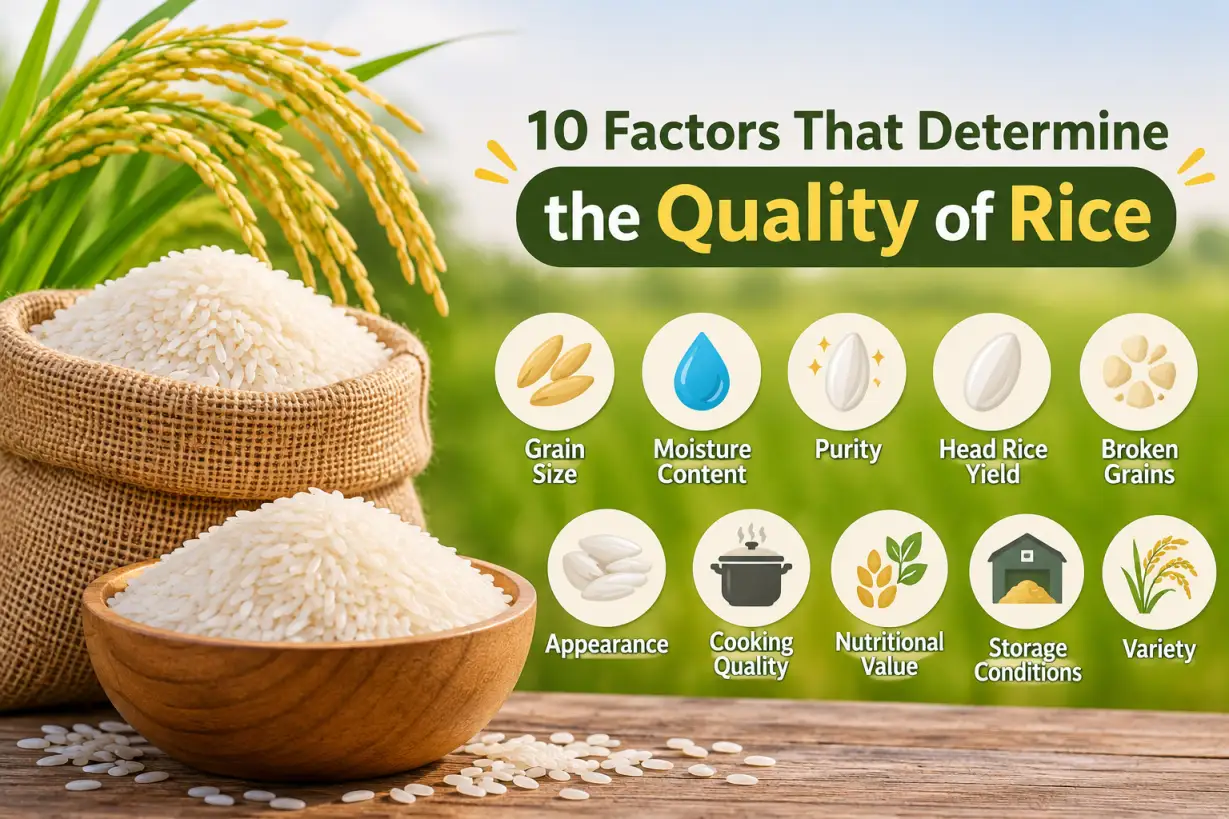
Rice quality depends on several factors, starting from paddy cultivation and continuing through harvesting, drying, storage and milling. These factors influence the grain's appearance, texture, cooking performance, nutritional value and market acceptance.
Understanding these 10 factors that determine the quality of rice helps farmers, rice mill operators, suppliers and buyers evaluate the quality of rice more effectively.
1. Rice Variety and Genetic Characteristics
The variety of rice plays an important role in determining its natural quality.
Different rice varieties have different physical and cooking properties.
- Grain length and shape.
- Aroma and natural colour.
- Texture after cooking.
- Amylose content and cooking characteristics.
- Natural resistance to grain breakage.
2. Paddy Moisture Content
Moisture content influences grain stability during drying, storage and milling.
- Excess moisture can encourage fungal growth.
- Uneven moisture can contribute to grain cracking.
- Improper drying may reduce whole-grain recovery.
- Proper moisture management helps preserve grain quality.
3. Harvesting Time
Harvesting paddy at the appropriate maturity stage helps maintain grain quality.
- Premature harvesting may result in immature grains.
- Delayed harvesting can increase exposure to weather damage.
- Proper maturity supports better grain development.
- Timely harvesting helps maintain uniform grain characteristics.
4. Drying Methods and Conditions
Drying is an important post-harvest operation that affects the physical condition of rice grains.
- Uneven drying may create internal grain stresses.
- Excessively rapid drying can cause fissures.
- Improper drying can increase grain breakage.
- Controlled drying helps maintain grain integrity.
5. Paddy Storage Conditions
Storage conditions directly influence the quality of paddy before milling.
- High humidity can encourage mould development.
- Insects and rodents can damage stored grains.
- Poor ventilation may cause moisture and heat accumulation.
- Proper storage helps preserve grain quality.
6. Cleaning and Removal of Impurities
Effective cleaning improves the purity of rice before and during processing.
- Removes dust, stones and straw.
- Separates unwanted foreign materials.
- Reduces contamination risks.
- Supports consistent processing and finished rice quality.
7. Milling Process and Equipment Settings
Rice milling operations determine how effectively the outer layers are removed while preserving the grain.
- Proper husking removes the outer husk.
- Controlled whitening removes bran layers.
- Suitable machine settings help reduce unnecessary grain damage.
- Regular equipment maintenance supports consistent processing.
8. Grain Breakage and Head Rice Recovery
The proportion of whole grains and broken rice is an important indicator of milling quality.
- Higher whole-grain recovery is desirable in many market segments.
- Excessive grain breakage can reduce commercial value.
- Grain fissures and unsuitable machine settings can increase breakage.
- Proper processing helps maintain kernel integrity.
9. Colour, Appearance and Uniformity
The physical appearance of rice influences consumer preference and market acceptance.
- Uniform grain size and shape improve presentation.
- Natural colour consistency indicates visual uniformity.
- Discoloured or damaged grains can affect appearance.
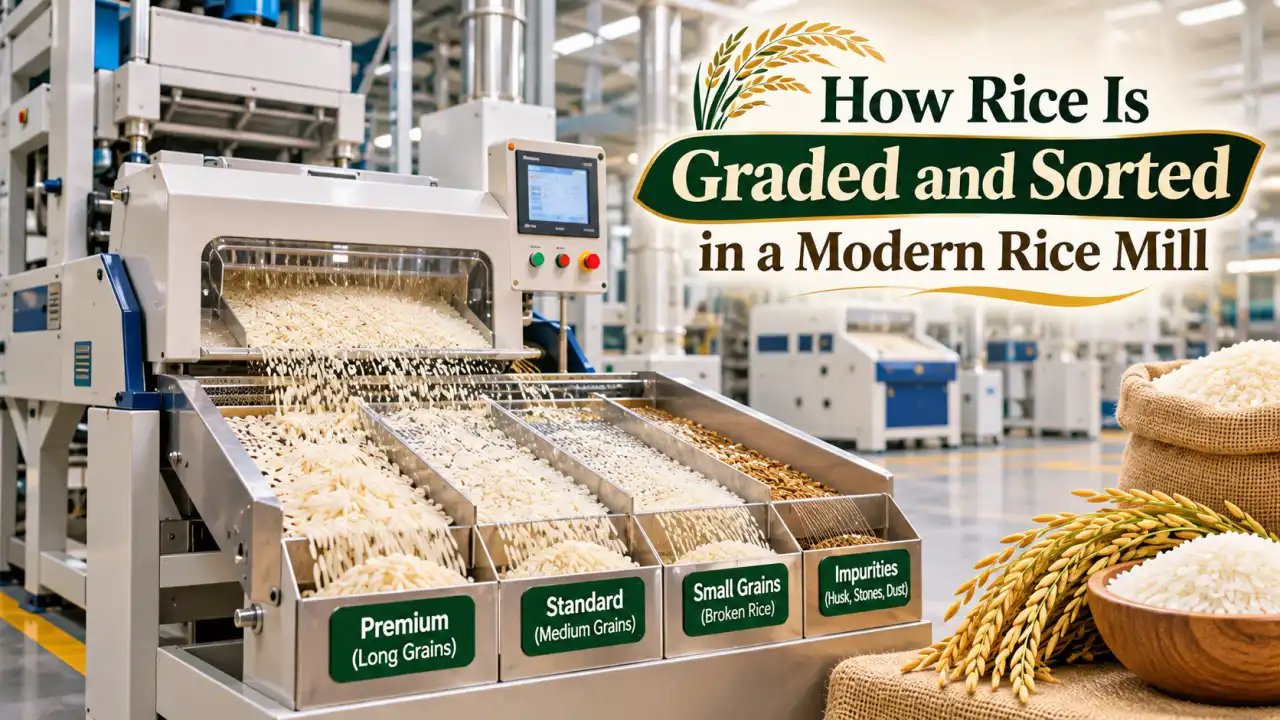
- Colour sorting helps separate defective and unwanted grains.
10. Cooking Quality and Texture
Cooking characteristics are important when evaluating rice for household and commercial use.
- Water absorption influences cooking behaviour.
- Amylose content affects cooked rice texture.
- Grain elongation is important for certain rice varieties.
- Aroma, softness and stickiness influence consumer preference.
Conclusion
Rice quality is not determined by a single measurement. It is the combined result of variety selection, moisture management, harvesting, drying, storage, cleaning and milling practices. Monitoring these factors helps rice mills maintain consistent product quality and meet customer expectations.